Latest features
Sign up to the Chambers Student newsletter for commercial awareness and news
 |
Law firms' preferred universities 2019 Over nine years we've tracked the universities feeding the legal profession. Our findings include: 76.5% of trainees at the leading 130+ firms are Oxbridge and Russell Group graduates. 5 July 2019 |
|
 |
Law firm salary hikes 2019 US firms present a power struggle in the London market - but this is very old news, says our research. What is new is the surprising hold millennials have in this economy. 26 June 2019 |
|
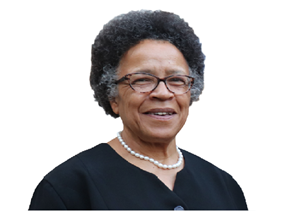 |
The Big Interview: Dame Linda Dobbs |
|
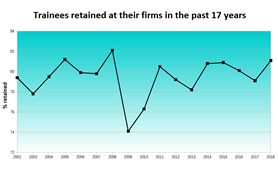 |
In the largest survey of its kind, we weigh up trainee retention rates across the legal market – how likely is it you'll score an NQ position at your firm? 29 March 2019 |
|
 |
What is Chancery law? (sponsored) Chancery is a big deal at the Bar. Many struggle to define it, but one set certainly doesn't: XXIV Old Buildings takes us on a walk down Chancery Lane... 21 November 2018 |
|
 |
How to succeed on a vac scheme (sponsored) Whether you’re applying for a vac scheme or you’ve got one lined up already, it’s important to understand what you can gain from one. Here are 15 easy steps to vac scheme success. 6 November 2018 |
|
 |
Debevoise & Plimpton - True Picture Debevoise lawyers work with colleagues across its network on areas ranging from international dispute resolution to investments funds. 30 October 2018 |
|
 |
How law firms are responding to Brexit To be a commercially aware candidate in 2018 means understanding how the legal profession is positioning itself for Brexit. 30 October 2018 |
|
 |
Becoming a project finance lawyer (sponsored) Project finance whizzes at White & Case talk us through the opportunities on offer to do project finance work at this global firm, especially in Africa. 23 October 2018 |
|
 |
STEM students: how to become a commercial lawyer (sponsored) With the help of Clifford Chance, we discover how a background in science, technology, engineering or maths could be the golden ticket to a rewarding legal career. 16 October 2018 |
|
 |
Improving diversity and inclusion at City law firms (sponsored) Travers Smith shows us how a City firm can break the mould and become a model for diversity – but “diversity is the easy bit!” lawyers tell us… 9 October 2018 |
|
 |
A short guide for anyone considering a career in law, whether you did law or a non-law degree. 9 October 2018
|
|
 |
Non-law students: yes, you can become a lawyer too Classics student and aspiring lawyer Henry Letts shares his experiences and others’ of pursuing a legal career from a non-law background. 4 September 2018 |
|
 |
Becoming a banking lawyer What is banking law? And what do banking lawyers do all day? Interviewees at Baker McKenzie explain. 24 July 2018 |
|
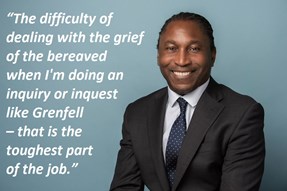 |
The Big Interview: Leslie Thomas QC Leslie Thomas QC is representing the families of Grenfell victims and working to protect land rights in Barbuda where "the fate of a whole island is at stake.” 17 July 2018 |
|
 |
A guide to mooting at university, law school and beyond. 3 July 2018 |
|
 |
If you fancy learning on the job and getting paid to do it, a law apprenticeship might be your ideal route into law – and you won't even need to impress Lord Sugar. 30 May 2018 |
|
 |
The Big Interview: Baroness Hale All Hale the Queen of Law! Chambers Student sits down with the first female president of the Supreme Court, Baroness Hale of Richmond. 10 April 2018 |
|
 |
The Crown Prosecution Service is the government department responsible for bringing prosecutions against people who have been charged with a criminal offence. 6 March 2018 |
|
 |
If you've got any pupillage interviews coming up this spring you are likely to face a topical legal-ethical problem question. Here's our advice on how to deal with them. 6 March 2018 |
|
 |
We looked at the gender pay gap from a new angle and found the market-wide gap to be much larger than expected. 20 February 2018 |
|
 |
School background of trainees solicitors How does school background affect your career in law? 20 February 2018 |
|
 |
A mix of commercial, charity and personal law work is on offer at South West London-based Russell-Cooke. 13 February 2018 |
|
 |
Becoming an energy lawyer Energy and natural resources is a fast-changing sector. Interviewees at Vinson & Elkins tell us what lawyers working in this area do. 16 January 2018 |
|
 |
On 4 December 2017 we attended the University of Law's 'Pupillage Application Question Time' to get some tips on pupillage applications. 9 January 2018 |
|
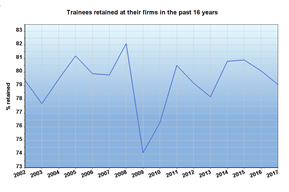 |
How likely are you to be kept on as a qualified solicitor by a firm after completing a training contract there? Our retention survey attempts to answer that question. 9 January 2018 |
|
 |
Becoming a lawyer outside London Once again, you cram yourself into the heaving rush-hour tube. Suddenly you realise that working in London just might not be that great... 3 January 2018 |
|
 |
Becoming a finance lawyer Mayer Brown has a significant focus on finance in its London office. We asked lawyers at this global firm to tell us what working in finance law involves day to day. 19 December 2017 |
|
 |
Professional and financial disputes They're the lawyers who other professionals turn to when their reputation is at stake. In this feature Clyde & Co's professional disputes lawyers share their experiences. 12 December 2017 |
|
 |
Becoming a corporate lawyer: the view from Freshfields If you don’t know your M from your A and scratch your head every time someone says ‘corporate law’, don’t sweat it. We’ve asked Freshfields lawyers to explain. 5 December 2017 |
|
 |
Technology, innovation and law firms Lots of law firms talk about being 'innovative', but what does this actually mean? Taylor Vinters provides some examples. 28 November 2017 |
|
 |
Planning and environmental law: the view from Landmark Chambers Three barristers from Landmark Chambers explain what planning and environmental law is and what's going on in these areas of law. 21 November 2017 |
|
 |
Becoming a lawyer in litigation We interviewed some Jones Day litigators to learn how they're building their careers and how they spend their days. 14 November 2017 |
|
 |
Construction law: the view from Keating Chambers (sponsored) Barristers at Keating Chambers share their views on how to build you career in construction law and give advice on how to get into the field. 7 November 2017
|
|
 |
Doing the LPC or thinking of starting it soon? An LPC student shares their anonymous tips and advice on how to survive and thrive on the course. 24 October 2017 |
|
 |
The Solicitors Qualifying Examination From 2021 there's going to be an entirely new way of qualifying as a solicitor replacing the GDL, LPC and training contract. 12 October 2017 |
|
 |
Arbitration: a beginner's guide International arbitration is the less-understood sibling of litigation, but it's a very big deal indeed. 12 October 2017
|